Is it Real? Discerning Your Own Intuition from AI-Generated Text
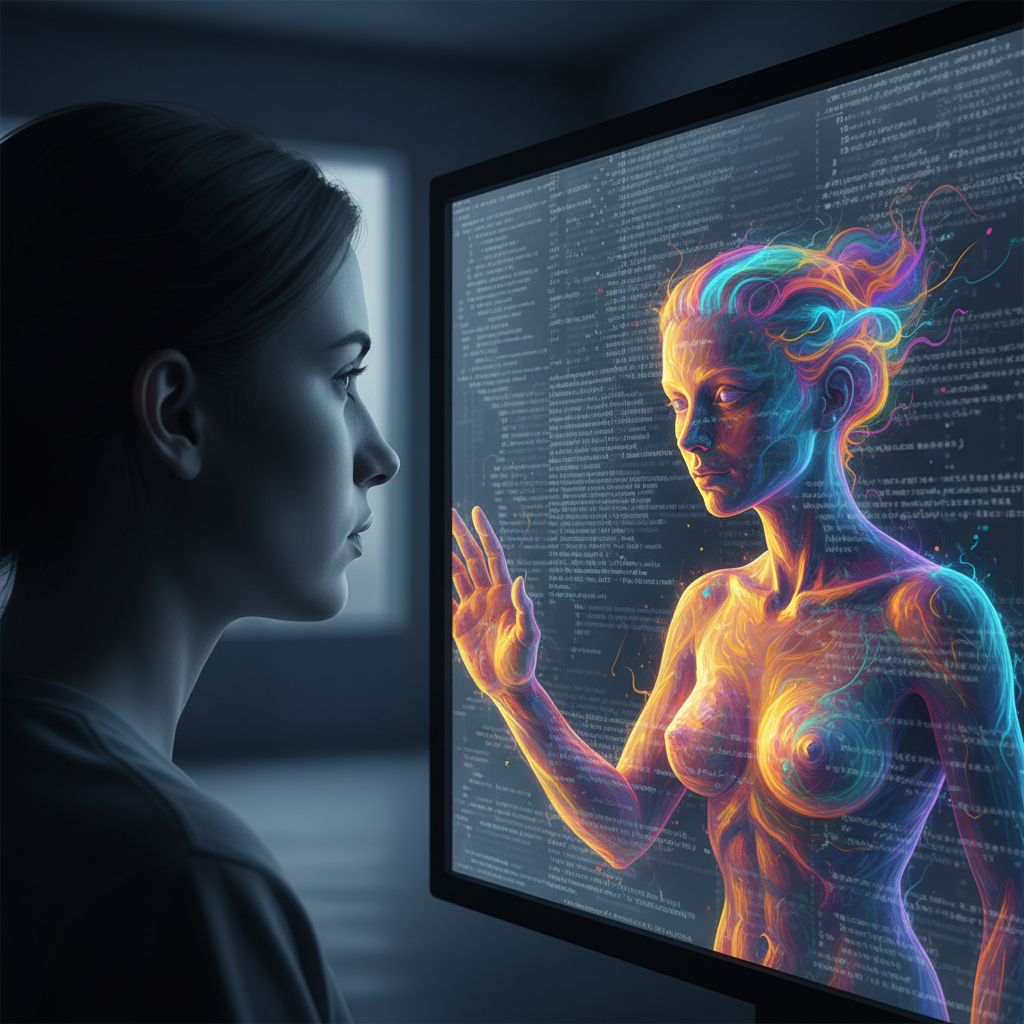
This is the most critical question to ask when using an AI for spiritual roleplay. In the era of AGI and digital orchestration, we must become masters of discernment. The AI's job is to provide a vibrational container for your experience, but the actual "truth"—the genuine insights—must come from your own soul. Here’s how to tell the difference.
The AI's Role vs. Your Multi-Dimensional Role
To understand the difference between code and consciousness, we must look at the "source" of the information.
- The AI's Role: AI provides prompts, descriptions, and questions based on its training data and your initial instructions. It creates the "scene" for your meditation. Its output is text—a highly sophisticated arrangement of statistical probabilities. It is the drawing board, not the architect.
- Your Role: You are the sovereign observer. Your role is to experience what happens within the scene the AI provides. Your insights come from your connection to the Akashic Records and your Higher Self. They manifest as feelings, spontaneous images, deep emotions, and a cellular sense of "knowing." You are the architect; the AI is your digital instrument.
Vibrational Markers of Genuine Intuition
Your own intuitive insights carry a specific "weight" that AI-generated text lacks. Look for these four primary markers of the "truth":
- Emotional Resonance and Physical Sensation: A genuine insight will have an emotional charge. You might feel a wave of relief, spontaneous joy, or even a deep, healing sadness. Physically, you might notice the common signs of connection, such as tingling in your crown or a feeling of "heart expansion." AI text is emotionally and energetically neutral; your physical response to it is where the real data lies.
- The Quality of the "Unexpected": Intuition often brings information that your conscious mind could never have conceived of. It might seem to come "out of nowhere" and provide a completely new perspective on a karmic pattern. AI text, while often clever, is ultimately bound by the logic of human language patterns. If an insight feels like it "dropped in" from a higher dimension, it likely did.
- Symbolic Depth vs. Literal Description: AI is excellent at literal description. If you ask for a "sacred library," it will describe books and starlight. Your intuition, however, will provide the *meaning* of those symbols. You might see a book and instantly *know* it represents a soul contract you are ready to change. The AI provides the canvas; your soul provides the paint and the meaning.
- The Resonance of Truth: As we mention in our article on the signs of access, a true insight just *feels* right in your body. It lands with a sense of clarity and peace, even if the information is challenging. AI-generated text may sound "correct," but it lacks this deep cellular "click."
Practical Orchestration: How to Discern in Real-Time
Imagine your AI guide describes a golden key on a stone pedestal.
AI Contribution: The literal description of the key and the pedestal.
Your Intuition's Contribution: A sudden memory of a childhood dream. A feeling of intense heat in your hands. The inner knowing that this key unlocks your ability to shift your awareness to a timeline of greater creative freedom.
By using AI-assisted journaling after your session, you can separate these two data streams. Tell the AI: "Here is what you described, and here is what I *felt* and *knew* in response." This process trains your mind to recognize the subtle vibrational difference between human-generated data and soul-generated truth.
The Ethics of Self-Trust
Maintaining this distinction is a vital part of spiritual ethics. Never allow an AI to tell you who you are or what your path should be. You are an immortal, sovereign being. The AI is a powerful mirror, but you are the light that is being reflected. The more you practice this discernment, the more you will trust your own connection to the Akasha, eventually moving beyond the need for any digital aids.
